Turning Challenges Into Opportunities in Business

Business owner turning challenges into opportunities in business with upward arrows and lightbulb

Have you ever had a moment in your business where something unexpected knocked the wind out of you?

A major client pulls out.
A workshop you ran doesn’t get enough participants to break even.
Your child gets sick and suddenly needs all your attention.

These moments feel personal. They feel urgent. Naturally, you just want the discomfort to stop.

But after more than 25 years of working with business owners, one thing is clear, turning challenges into opportunities in business is what separates those who grow from those who stay stuck.

Challenges do not usually destroy businesses. More often, it is how a business responds to them that determines what happens next.

Why Business Challenges Feel So Overwhelming

If you are running your business on your own, or you are leading a small team, you are likely carrying a lot.

•Client relationships

•Service delivery

• Administration

• Sales and marketing

• Problem solving

• Decision making

Then life happens.

You get sick, or something unexpected pulls you away from your business. Suddenly, enquiries go unanswered, follow-ups get missed, work starts piling up and momentum begins to slow. 

Revenue might not collapse overnight, but momentum often does and that creates unnecessary stress.

Instead of resting or stepping back to think clearly, many business owners push through. Because if they are not working, they are not getting paid.

It’s common. But it’s also reactive and not sustainable.

This is why turning challenges into opportunities in business matters so much. When you respond with clarity instead of panic, setbacks can reveal exactly what needs to be strengthened.

A better question to ask when something goes wrong

When business pressure hits, many people ask, “How do I fix this quickly?”

A better question is:

What has this situation revealed?

Most disruptions expose what is happening beneath the surface. They often highlight:

• No simple systems to keep things running when you step away

• No documented processes for repeatable tasks

• No templates for common communication

• No clear structure guiding your week

• Too much reliance on you to hold everything together

This is where recognising opportunities in business becomes powerful.

Because the real problem is often not the disruption itself. It is the lack of structure underneath it. When you can see that clearly, the challenge becomes useful. It stops being just a frustrating situation and starts becoming a signal for improvement.

The hidden opportunity behind every setback

The real opportunity in any challenge is this: 

It shows you exactly where your business is vulnerable.

When something breaks, it usually reveals one or more of the following:

• A weak process

• A missing system

• Unclear expectations

• Inconsistent follow through

• A heavy reliance on you doing everything

If you ignore it, the same issue will keep showing up in different forms.

But if you address it, you create a stronger and more resilient business.

This is why turning challenges into opportunities in business is not just a positive mindset concept. It is a practical business strategy.

Every disruption gives you insight. It tells you where your systems are weak, where your structure is missing, and where your business needs more support to grow sustainably. 

3 practical ways to build a more resilient business

Instead of jumping back into “business as usual,” use disruption as a turning point.

1. Document your repeatable tasks.

Write down the steps for tasks you do regularly.

This might include onboarding a client, sending quotes, following up leads, invoicing, closing out jobs, or preparing for a weekly meeting.

Documenting these tasks helps you:

• Save time

• Reduce mistakes

• Improve consistency

• Delegate more easily

• Outsource with more confidence

Strong business systems and processes reduce the pressure on you and make it easier for the business to keep moving when unexpected things happen.

2. Create standard templates.

Stop rewriting the same things over and over.

Create templates for:

• Enquiries

• Follow-ups

• Quotes

• Invoices

• Onboarding clients

Templates improve consistency, save time, and reduce decision fatigue. They also help maintain professionalism when you are busy or under pressure.

This is one of the simplest ways to improve business efficiency without needing a major overhaul.

3. Identify and protect your core tasks.

Know what must get done every week, no matter what.

This includes the tasks that directly support:

• Client delivery

• Revenue generation

• Administration

Many business owners stay busy but are not always focused on the activities that actually move the business forward.

Protecting your core tasks helps you stay anchored during difficult periods and supports small business growth strategies that are practical and sustainable.

Build systems, not stress

Whether another disruption happens next week or not, these changes will still strengthen your business.

They help make your business:

• More efficient

• More profitable

• Less dependent on you

• Easier to manage

• More resilient over time

Because the real issue is rarely the challenge itself. More often, it is the lack of systems behind it.

When you fix the system, you do not just solve today’s problem. You build long term business resilience, turning challenges into opportunities part of how your business operates.

When the next challenge happens, do this

The next time something goes wrong in your business:

• Step back before stepping in

• Identify what gap has been exposed

• Strengthen the structure, not just the surface problem

Whether it is time pressure, cash flow pressure, declining leads, poor follow through, or inconsistent delivery, there is usually a system behind it.

Fix the system, and you do more than solve the issue in front of you. You create opportunities in business that support future growth, strengthening your small business growth strategies.

What this means for your business

Turning challenges into opportunities in business is not about pretending problems are positive, it’s about using problems as signals. 

Signals that guide you to:

• Improve your systems

• Strengthen your structure

• Create clear processes

• Build a business that works more effectively, even when life happens. 

That is how resilience is built.

That is how confidence grows.

And that is how business owners create stronger foundations for long term success.

If you are currently feeling stuck, stretched, or dealing with a challenge in your business, it may be revealing exactly what needs attention next.

Sometimes the breakthrough is not in pushing harder. It is in strengthening what sits underneath the pressure.

Let’s uncover what it’s really showing you. Together, we can identify the gap, strengthen the structure, and turn the pressure point into a stronger foundation for growth – Let’s talk 
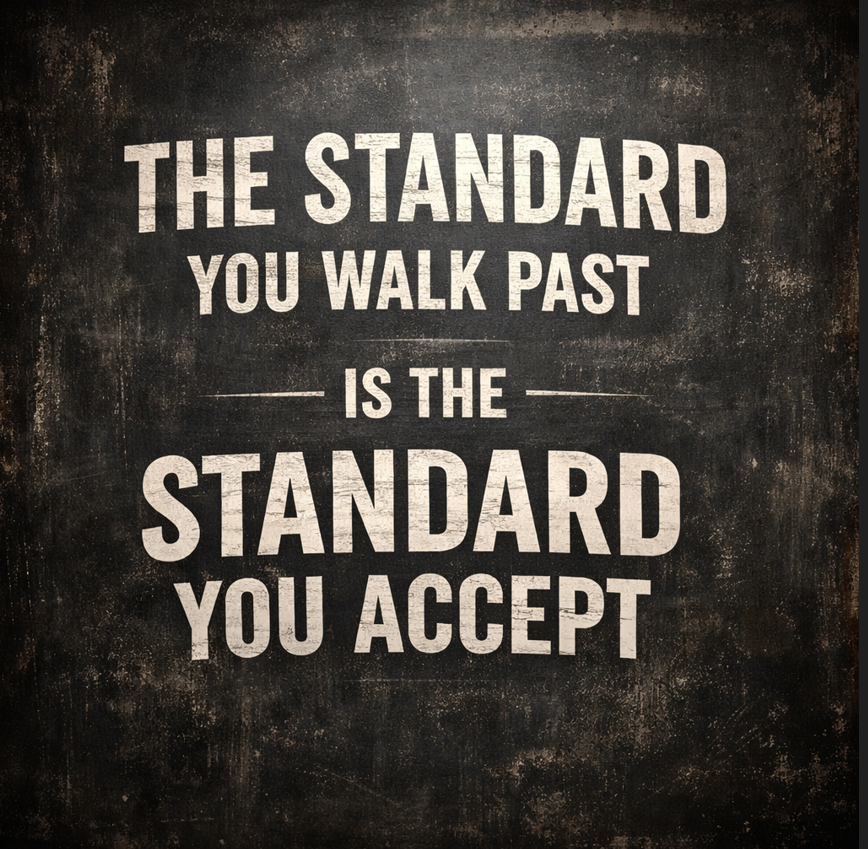
The Standard You Walk Past Is the Standard You Accept in Business

“The standard you walk past is the standard you accept in business quote on dark textured background representing leadership and accountability”

There is a line I come back to often because it keeps leaders honest and it keeps businesses improving.

The standard you walk past is the standard you accept.

Not the standard you talk about in meetings.
Not the one written in a values document.
Not the one printed on posters in the lunchroom.

The real standard in any business is the one you tolerate in the moment especially when it would be easier to ignore it.

This is one of the clearest lessons in business leadership standards. What leaders allow, even silently, shapes business culture, team behaviour, customer experience and long term results.

Why raising standards in business matters

Many business owners want growth, stronger performance, better accountability and more consistency from their team. Yet these outcomes do not happen by chance.

They happen when there is clarity around expectations and consistency around what is accepted.

This is why raising standards in business matters so much. Standards influence:

• The quality of work delivered

• How your team behaves day to day

• How problems are addressed

• How customers experience your business

• How sustainable your growth really is

Without strong standards, businesses do not move toward operational excellence. They drift toward inconsistency.

A moment that reinforced this lesson for me

I was reminded of this in a very real way during a first visit with a potential client.

They were interviewing me and I was interviewing them too.

That is something I believe strongly. While a potential client may be assessing your capability, you are also assessing their leadership, their culture and their willingness to do the work required to lift standards.

They invited me into their manufacturing plant to show me their production process and finished products. As we walked through, I noticed something immediately.

One of the products they were working on would not have been acceptable in my eyes if I had received it as a customer.

And in that moment, I had a choice.

I could say nothing, smile, keep the peace and focus on getting the work.

Or I could speak up, risk making them uncomfortable and possibly lose the opportunity.

I chose to speak up.

Not because I wanted to make a point and not because I wanted to prove anything, but because it aligned with my values. If I was going to step into their business and help them improve, grow and build stronger foundations, honesty mattered more than comfort.

I also knew that the owner’s response would tell me everything I needed to know about whether I wanted to work with them.

So I said it, respectfully and directly. I explained what I was seeing and why it would not meet the standard a customer should receive.

Then I watched what happened next.

The second I raised it, the owner turned to his team member and said, “Let’s get that fixed”

No defensiveness.
No excuses.
No ego.

Just action.

The next day, he called me and said, “When can you start?”

That conversation became the beginning of a two year working relationship.

What strong leadership and standards look like

That experience reinforced something I still believe deeply.

It is not just about getting the work. It is about working with people who value leadership and standards, take ownership and follow through, even when it is inconvenient, even when it requires change and even when it means having honest conversations.

That is where real improvement starts.

Strong businesses are not built by avoiding issues. They are built by addressing them.

This is a core part of business culture and accountability. When leaders respond with ownership instead of defensiveness, they create an environment where improvement becomes normal.

Businesses do not drift into excellence

Businesses do not drift into excellence.

They drift into tolerance.

They drift into, “She’ll be right.”

They drift into shortcuts, rework, messy handovers, inconsistent customer experiences and team members doing what is normal here, not what is best.

Most of the time, this does not happen because people do not care. It happens because leaders get busy. Standards slip quietly. Small things become accepted. Then over time, those accepted behaviours become culture.

This is why operational excellence is not created through intention alone. It is created through what leaders consistently notice, address and reinforce.

What are you walking past in your business right now?

This is the question worth sitting with.

What are you walking past in your business right now?

Maybe it is quality that is almost good enough.

Maybe it is customer service standards that feel a little off, but you have not addressed them.

Maybe it is a team member not following the process and everyone has started working around them.

Maybe it is your financial numbers being reviewed late, invoices going out inconsistently, follow ups not happening or jobs not being closed out properly.

Maybe it is poor communication, unclear expectations or a lack of ownership that is affecting improving team performance.

Whatever it is, if it is happening regularly, it is no longer a one off.

It is a standard.

And standards are not raised by intention. They are raised by what you are willing to address, consistently.

The link between standards, systems and growth

If you want a team that performs at a higher level, you have to model what higher looks like.

If you want clients to trust you, you have to uphold the basics even when nobody is watching.

If you want growth, you need the discipline, structure and business systems and processes that can actually sustain it.

That is where many businesses get stuck. They want better outcomes, but the underlying standards are not being reinforced consistently enough to support those outcomes.

This is why business growth and accountability go hand in hand. Growth without standards creates pressure. Growth with standards creates stability.

Raising standards in business is practical, not theoretical

Raising standards in business is not about becoming harder, colder or unrealistic.

It is about becoming clearer.

Clearer on what is expected.
Clearer on what good looks like.
Clearer on what gets followed up.
Clearer on what will no longer be ignored.

This is what creates better accountability, stronger team performance and more consistent customer experiences.

It is also what helps reduce rework, improve communication and create better day to day routine across the business.

The work I do with business owners

This is the work I do with business owners.

Not band-aid fixes, but helping them lift the standards that drive outcomes, through clear expectations, practical systems, simple routine, stronger follow through and processes their team can actually use.

Because improving performance is not just about telling people to do better. It is about building the environment, structure and accountability that make better performance more likely.

That is how standards become real.

That is how culture changes.

That is how businesses strengthen from the inside out.

What you tolerate shapes the outcome

The standard you walk past today becomes the standard you live with tomorrow.

If you know there are standards slipping in your business, whether in quality, customer experience, communication, accountability, systems or follow through, it is worth paying attention.

Because what you tolerate does not stay small.

It shapes the culture.
It affects the team.
It impacts the customer.
And over time, it influences the results your business gets.

If this hit home and you know there are standards slipping in your business, I would be happy to have a conversation.

Tell me what you are noticing and we can explore what tightening the standard could look like and what it would change for your team, your customers and your results.

Because the standard you walk past is the standard you accept.

At EmpowerBeyond, we help business owners improve performance across people, process, products and services, while also increasing productivity, profitability, and cash flow clarity.

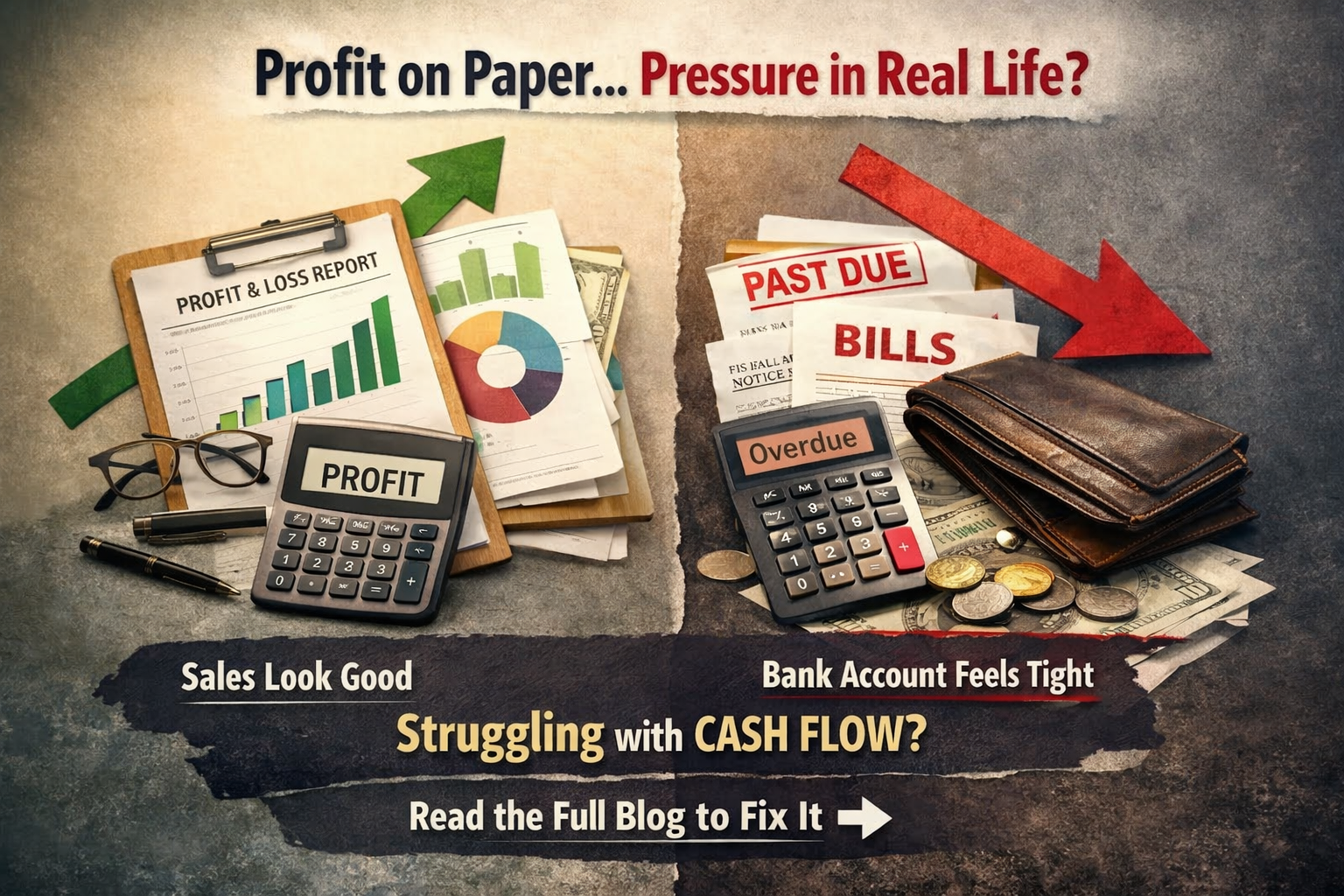
Profit on Paper, Pressure in Real Life: How to Improve Cash Flow in Small Business

small business cash flow problem showing profit on paper but real life financial pressure with bills and overdue expenses

Are you making sales in your business, but still feeling financial pressure?

This is a common experience for many business owners. Revenue may be coming in, work may be flowing, and your profit and loss report might even show a profit, yet your bank account still feels tight. Bills keep coming, cash feels unpredictable, and paying yourself consistently can feel harder than it should.

If that sounds familiar, you are not alone.

One of the biggest misunderstandings in small business finance is assuming that profit automatically means healthy cash flow. It does not. A business can look profitable on paper and still feel financially strained in real life.

The issue is often not sales. It is usually the structure, timing, and management of your cash flow. This is why cash flow management for small business is so important.

What is cash flow and why does it matter?

Cash flow is the movement of money in and out of your business.

It is not just about how much money you make. It is about when money comes in, when it goes out, and whether there is enough available at the right time to cover your expenses.

Healthy small business cash flow helps you:

• Pay wages, suppliers, and overheads on time

Reduce financial stress

• Make better business decisions

• Plan ahead with more confidence

• Pay yourself more consistently

• Create stability as your business grows

Without cash flow clarity, even a busy business can feel financially heavy.

Why profit on paper does not mean money in the bank

Understanding profit versus cash flow is essential for every business owner.

Profit is an accounting figure. It shows whether your income has exceeded your expenses over a period of time.

Cash flow is different. It shows what money is actually available in your bank account at any given point in time.

For example, you may complete a job and issue an invoice today. That income may appear in your financial reports, but if the client does not pay for 30, 45, or 60 days, the cash is not yet available to use.

That is where pressure starts.

You might look at your reports and think the business is doing well, while at the same time feeling stressed about rent, wages, software subscriptions, BAS, tax, superannuation, or your own drawings.

This is why cash flow management for small business matters so much. It gives you visibility over what is really happening, not just what appears in the reports.

Signs your business may have a cash flow issue

Cash flow problems do not always show up as a major crisis. Often, they appear as ongoing pressure points in the day-to-day running of the business.

Some common signs include:

• Sales are steady, but the bank balance remains low

• You delay paying yourself because other expenses come first

• You feel anxious when bills are due

• You rely on credit cards, overdrafts or personal funds to cover gaps

• Clients owe you money, but your own payments are due now

• The business looks busy, but still feels financially tight

If any of these sound familiar, it may be time to review your small business cash flow structure rather than simply focusing on increasing sales.

Common reasons cash flow gets tight 

1. Invoices are sent too late

If you delay invoicing, you delay payment. Waiting until the end of the week or month to send invoices stretches your cash cycle and slows down your inflow.  

2. Payment terms are too long

Many businesses offer 30 day terms as a default, without assessing whether those terms actually suit the business. If your clients are paying later than your own expenses fall due, the gap creates pressure. 

3. Outstanding invoices build up

Money sitting in accounts receivable may look fine in a report, but it does not help your cash position until it is actually paid. 

4. Recurring costs quietly drain cash

Software subscriptions, direct debits, membership and other small monthly expenses can add up quickly. Individually they may seem manageable, but together they can reduce available cash more than you realise. 

5. There is no cash flow forecast

Without a forecast, many business owners are forced to react based on today’s bank balance instead of planning for what is coming over the next few weeks. This is where cash flow forecasting becomes a powerful tool. 

6. Growth is stretching the business

Growth often increases pressure before it improves results. More work can mean more wages, more materials or more service delivery costs before the income is actually received.

4 practical ways to improve cash flow in your business

Improving cash flow is not always about working harder or making more sales. Often, it comes down to tightening the systems around how money moves through your business.

If your goal is to improve cash flow, the following steps can make a significant difference. 

1. Tighten invoicing immediately

Invoice as soon as work is completed, not days or weeks later.

The faster you send invoices, the sooner the payment clock starts. Make sure invoices are accurate, clear, and sent through a consistent process.

Ask yourself:

• Are invoices being sent on the same day the work is completed?

• Is someone clearly responsible for sending them?

Are overdue accounts being followed up promptly?

A strong invoicing process is one of the most practical business cash flow tips for any service-based business. 

2. Review your payment terms

Take a close look at the terms you offer your clients.

Do you really need to offer 30-day terms? Could new clients be placed on 7-day terms instead? Could you ask for deposits up front or implement progress payments for larger projects?

Consider options such as:

• Upfront deposits

• Part payments at milestones

• 7-day payment terms

• Payment on completion

• Direct debit arrangements for regular clients

Even bringing part of your revenue forward can significantly improve cash flow.  

3.  Forecast your cash flow, not just your sales

A sales forecast tells you what you hope to earn. A cash flow forecast tells you when money is expected to arrive and what needs to be paid out.

This is where cash flow forecasting gives you greater control.

A simple 12-week cash flow forecast can help you:

• Identify shortfalls before they happen

• Plan for tax and BAS obligations

• Decide when to follow up debtors

• Time purchases more carefully

• Make decisions with more confidence 

When you understand the timing of your cash, you reduce surprises and regain control. For many owners, cash flow forecasting is one of the most effective ways to support stronger small business finance decisions.  

4. Review expenses with intention

Go through your recurring expenses and assess whether each one still serves your business.

Ask:

• Is this essential?

• Is it supporting efficiency, service or growth?

• Is it being used regularly?

• Can it be reduced, renegotiated or cancelled?

Small, consistent savings can improve cash flow over time and create more breathing room for a small business.

Business cash flow tips that create long term stability

Good cash flow habits do not just help in the short term. They create stronger foundations for growth, decision making, and confidence.

Some of the most effective business cash flow tips include:

• Invoicing promptly

• Following up overdue payments consistently

• Reviewing payment terms regularly

• Using cash flow forecasting

• Monitoring recurring expenses closely

• Understanding the difference between profit versus cash flow

The more visibility you have, the easier it becomes to lead your business proactively instead of reactively.

Cash flow clarity changes everything

When cash flow feels unclear, stress increases. You second-guess decisions, delay action, and may feel like no matter how hard you work, there is never enough left.

When you gain clarity around small business cash flow, you lead differently.

You plan ahead.
You make decisions with confidence.
You know where pressure points are.
You create more consistency.
You stop reacting and start managing proactively.

Good cash flow management for small business is not just about the numbers. It is about building a business that feels stable, sustainable, and easier to lead.

What this means for your business

If your business is showing profit on paper but still feeling tight in real life, it is worth taking a closer look at your cash flow.

The issue may not be the amount of revenue coming in. It may be the timing, structure and visibility of how that money moves through your business.

By tightening invoicing, reviewing payment terms, using cash flow forecasting and controlling costs with intention, you can improve cash flow and create a stronger financial foundation.

Understanding profit versus cash flow is one of the most important steps in strengthening your small business finance approach and reducing unnecessary pressure.

At EmpowerBeyond, we help business owners improve performance across people, process, products and services, while also increasing productivity, profitability and cash flow clarity.

Do you need support to improve cash flow, build better systems, and create more confidence in your numbers? Contact EmpowerBeyond to start building stronger cash flow management for small business.


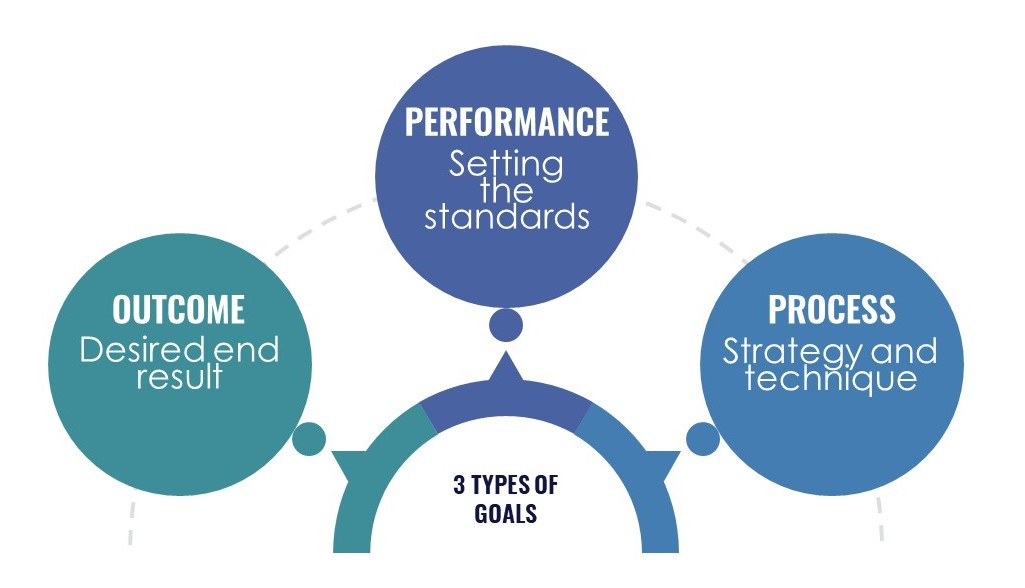
3 Types of Business Goals

infographic 3 types of business goals: Outcome, Performance and Process for business finance and productivity.

Every business owner sets business goals, whether they are financial or non-financial.

Have you ever wondered why you keep setting business goals but find it hard to achieve them?

You try to motivate yourself, review your goals daily, and repeat positive affirmations, yet still feel disappointed.

The issue is that setting OUTCOME goals alone will not get you results. You may be asking, “Androulla, what are outcome goals?”

Outcome goals give you a sense of direction and where you want to head. But these are only one of the types of business goals you need. The other 2 types of business goals I’m going to share with you are more controllable and action-oriented.

Typically, we set what we call “outcome” goals

Outcome goals are high-level and they focus on the desired end result. Examples:
– Sales for December to be $20,000
– Number of clients for December to be 10
– New clients from overseas each month to be 2

The following 2 types of business goals are actionable and controllable:

Performance goals are designed to align with your outcome goals. These goals identify specific standards and are the actions you need to take – the ‘DO.’ Examples:
– Make 100 sales calls a week and convert 2 a week
– Have 100 visitors to the website a week to book a call or get a quote.

Process goals are the ‘HOW‘, the strategy or technique used to perform the tasks.
Examples:
– Reply back to enquiries within 2 hours
– All sales calls to be made before 10am
– Leads to follow up in the future to be added to your database with a reminder

The chances of achieving your outcome goals increase when you have aligned performance and process goals that you monitor and assess.

If you want to learn more about setting the right types of business goals for your business, I’d love to hear from you – reach out and get in touch. Click here to book a 15-minute chat with me.

EmpowerBeyond – Business Performance Solutions, focusing on people, process, products, and services while improving productivity and cash flow.

What Gets Scheduled Gets Done — Practical Productivity Tips

Small business owner scheduling tasks for productivity

Have you ever been in a situation where you hear yourself saying, ‘I know I needed to do something today, but I just can’t recall what that is,’ and you sit there rattling your brain trying to remember? I know I have.

Not only do you lose time thinking about it, but you can also lose so much more if what you forget can affect your work — for example, not turning up for an important meeting, forgetting to re-ordering stock, or missing a submission’s due date. These are common challenges for anyone running a small business.

Have you heard the saying “What gets scheduled gets done”? It’s one of the simplest tips to improve your day-to-day efficiency.

By scheduling things in your calendar, the likelihood of you completing those items increases. This simple act can greatly enhance your productivity and help you stay focused on what matters most.

You can’t always remember everything and why would you need to when you have many tools to do this for you. These days your mobile phone has a calendar. You can set a reminder which can be done in seconds. You can also schedule a task or reminder it in your desktop calendars like Outlook, Google and iCloud. These are all excellent tips for anyone wanting to run a successful small business without unnecessary stress.

Some of the reminders will be in the short or long term or recurring.
Be specific when making entries in your calendar, you don’t want to look at an entry you put in your calendar a month ago and not remembering what that meant. These small details matter for productivity.

Another tip when scheduling is to COLOUR CODE your entries, so at a glance you can see with ease what you have achieved for the week or month — a practical tip that many small business owners overlook.

An example of colour coding can be:

• Appointment (yellow)

• Administration work (orange)

• Client work (green)

• Calls to make (red)


Scheduling creates order and structure. You will feel a sense of control in your business and will start noticing just how much you can get done in the day. Focusing on productivity like this is one of the most effective ways for small business owners to stay on top of their workload.

If you are already scheduling things in your calendar, then that’s great. Maybe see how you can improve on it, for example, add a reminder alert or colour coding, small tips that can make a big difference.

Embrace SCHEDULING things in and notice how much you GET DONE!

If you are interested in knowing more about managing your workload and increasing productivity, I’d love to hear from you, reach out and get in touch.

EmpowerBeyond – Business Performance Solutions, focusing on people, process, products and services and improving productivity and cash flow.

If you are interested in knowing more about managing your workload and increasing productivity, I’d love to hear from you – reach out and get in touch.

EmpowerBeyond – Business Performance Solutions, focusing on people, process, products and services and improving productivity and cash flow.

Why Trusting Your Gut Matters in Business

Business Coach Australia, Androulla Sakkas discussing decision making and business values

As a Business Coach in Australia working with small business owners, I often see leaders ignore one of their most powerful decision-making tools — their intuition. While data and financials matter, sustainable small business growth also comes from aligning your decisions with your core values.

Your gut feeling is telling you something.

In this video I talk about why it’s important to go with your gut feeling in business, especially for small business owners navigating growth and leadership in Australia. Through Business Coaching, I often see how powerful intuition can be in strengthening business decision-making.

Typically in business, we talk about the facts, talk about the numbers behind the situation, and do all our research. However, there is another element that helps drive our decisions and that’s our gut feel. 

Think about it, have you ever been in a situation where something just doesn’t feel right. You can’t put your finger on the pulse and it keeps you up at night, or you have those constant thoughts keep running through your mind. Well, it’s all due to you not being aligned with your values. In business, this misalignment can impact productivity, leadership confidence, and even cashflow performance.

Let’s take a scenario where you’re working on a client’s project and you’ve left something out and you know it. Your gut feeling is saying, maybe I should have added those extra details to the product or service. Or you’re worried about meeting the timeline and you start getting a little bit anxious about it. 

The reason why you’re starting to feel this way is because of your values, and in this situation your values could be being professional, being detail-oriented, reliable, responsive and committed, committed to the deadlines that you said that you will deliver for your client.

Sometimes we undervalue business values and these are the drivers of our actions. So next time you’re in this situation, I want you to start thinking about what values you are not fulfilling in your business and are not aligning with the work you’re doing for your clients. This is a core focus area in Business Coaching, helping business owners across Australia strengthen clarity, confidence and performance.

Hopefully, you’ve already identified your core business values. If you haven’t, that’s perfectly fine. Feel free to reach out and let’s have a chat. This could be a game-changer for you in your business taking it from being okay to excellent and something you’d be proud of.

To make a booking with me click here.

EmpowerBeyond – Business Performance Solutions, focusing on people, process, products and services and improving productivity and cash flow across Australia through strategic Business Coaching.