
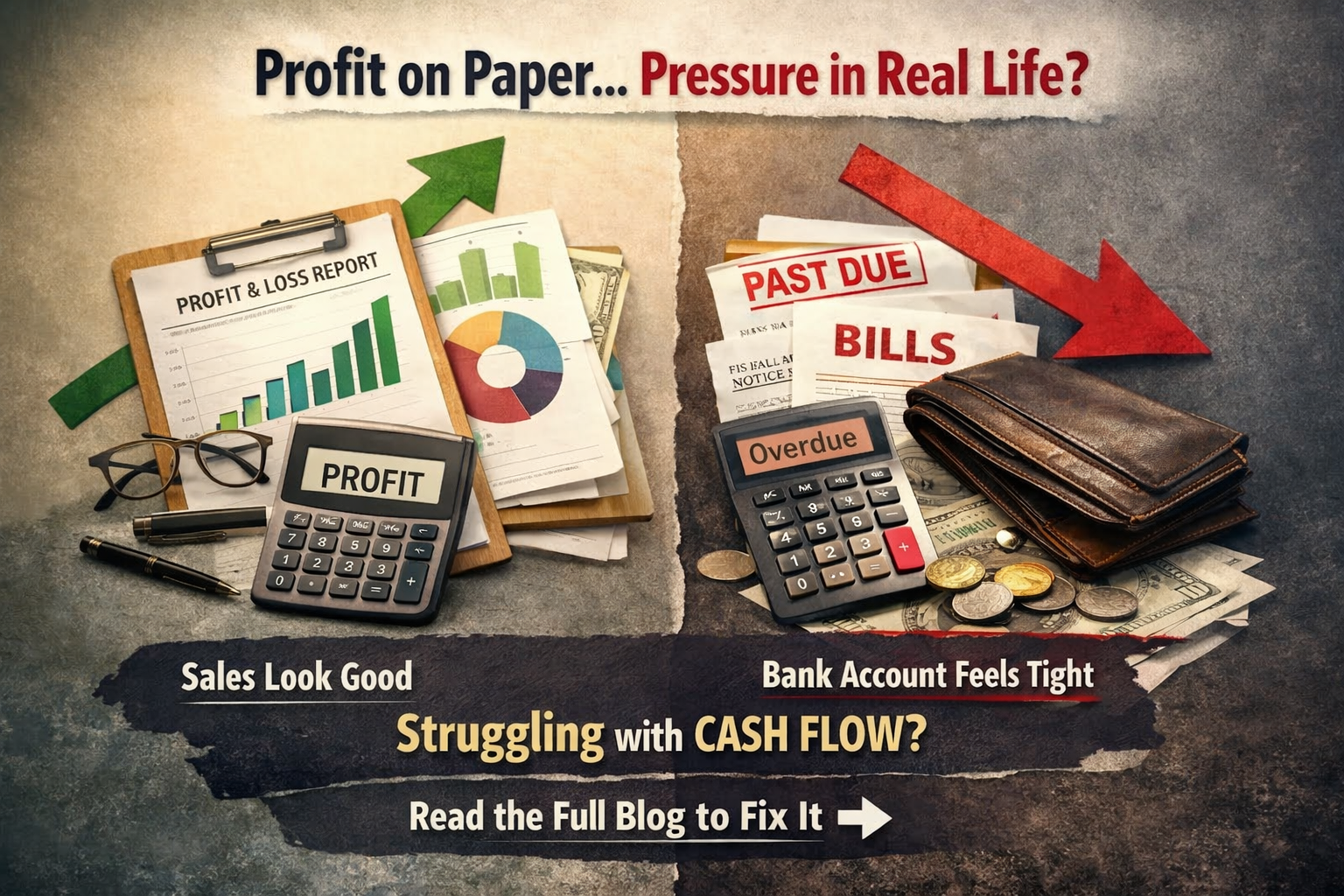
Are you making sales in your business, but still feeling financial pressure?
This is a common experience for many business owners. Revenue may be coming in, work may be flowing, and your profit and loss report might even show a profit, yet your bank account still feels tight. Bills keep coming, cash feels unpredictable, and paying yourself consistently can feel harder than it should.
If that sounds familiar, you are not alone.
One of the biggest misunderstandings in small business finance is assuming that profit automatically means healthy cash flow. It does not. A business can look profitable on paper and still feel financially strained in real life.
The issue is often not sales. It is usually the structure, timing, and management of your cash flow. This is why cash flow management for small business is so important.
What is cash flow and why does it matter?
Cash flow is the movement of money in and out of your business.
It is not just about how much money you make. It is about when money comes in, when it goes out, and whether there is enough available at the right time to cover your expenses.
Healthy small business cash flow helps you:
• Pay wages, suppliers, and overheads on time
• Reduce financial stress
• Make better business decisions
• Plan ahead with more confidence
• Pay yourself more consistently
• Create stability as your business grows
Without cash flow clarity, even a busy business can feel financially heavy.
Why profit on paper does not mean money in the bank
Understanding profit versus cash flow is essential for every business owner.
Profit is an accounting figure. It shows whether your income has exceeded your expenses over a period of time.
Cash flow is different. It shows what money is actually available in your bank account at any given point in time.
For example, you may complete a job and issue an invoice today. That income may appear in your financial reports, but if the client does not pay for 30, 45, or 60 days, the cash is not yet available to use.
That is where pressure starts.
You might look at your reports and think the business is doing well, while at the same time feeling stressed about rent, wages, software subscriptions, BAS, tax, superannuation, or your own drawings.
This is why cash flow management for small business matters so much. It gives you visibility over what is really happening, not just what appears in the reports.
Signs your business may have a cash flow issue
Cash flow problems do not always show up as a major crisis. Often, they appear as ongoing pressure points in the day-to-day running of the business.
Some common signs include:
• Sales are steady, but the bank balance remains low
• You delay paying yourself because other expenses come first
• You feel anxious when bills are due
• You rely on credit cards, overdrafts or personal funds to cover gaps
• Clients owe you money, but your own payments are due now
• The business looks busy, but still feels financially tight
If any of these sound familiar, it may be time to review your small business cash flow structure rather than simply focusing on increasing sales.
Common reasons cash flow gets tight
1. Invoices are sent too late
If you delay invoicing, you delay payment. Waiting until the end of the week or month to send invoices stretches your cash cycle and slows down your inflow.
2. Payment terms are too long
Many businesses offer 30 day terms as a default, without assessing whether those terms actually suit the business. If your clients are paying later than your own expenses fall due, the gap creates pressure.
3. Outstanding invoices build up
Money sitting in accounts receivable may look fine in a report, but it does not help your cash position until it is actually paid.
4. Recurring costs quietly drain cash
Software subscriptions, direct debits, membership and other small monthly expenses can add up quickly. Individually they may seem manageable, but together they can reduce available cash more than you realise.
5. There is no cash flow forecast
Without a forecast, many business owners are forced to react based on today’s bank balance instead of planning for what is coming over the next few weeks. This is where cash flow forecasting becomes a powerful tool.
6. Growth is stretching the business
Growth often increases pressure before it improves results. More work can mean more wages, more materials or more service delivery costs before the income is actually received.
4 practical ways to improve cash flow in your business
Improving cash flow is not always about working harder or making more sales. Often, it comes down to tightening the systems around how money moves through your business.
If your goal is to improve cash flow, the following steps can make a significant difference.
1. Tighten invoicing immediately
Invoice as soon as work is completed, not days or weeks later.
The faster you send invoices, the sooner the payment clock starts. Make sure invoices are accurate, clear, and sent through a consistent process.
Ask yourself:
• Are invoices being sent on the same day the work is completed?
• Is someone clearly responsible for sending them?
Are overdue accounts being followed up promptly?
A strong invoicing process is one of the most practical business cash flow tips for any service-based business.
2. Review your payment terms
Take a close look at the terms you offer your clients.
Do you really need to offer 30-day terms? Could new clients be placed on 7-day terms instead? Could you ask for deposits up front or implement progress payments for larger projects?
Consider options such as:
• Upfront deposits
• Part payments at milestones
• 7-day payment terms
• Payment on completion
• Direct debit arrangements for regular clients
Even bringing part of your revenue forward can significantly improve cash flow.
3. Forecast your cash flow, not just your sales
A sales forecast tells you what you hope to earn. A cash flow forecast tells you when money is expected to arrive and what needs to be paid out.
This is where cash flow forecasting gives you greater control.
A simple 12-week cash flow forecast can help you:
• Identify shortfalls before they happen
• Plan for tax and BAS obligations
• Decide when to follow up debtors
• Time purchases more carefully
• Make decisions with more confidence
When you understand the timing of your cash, you reduce surprises and regain control. For many owners, cash flow forecasting is one of the most effective ways to support stronger small business finance decisions.
4. Review expenses with intention
Go through your recurring expenses and assess whether each one still serves your business.
Ask:
• Is this essential?
• Is it supporting efficiency, service or growth?
• Is it being used regularly?
• Can it be reduced, renegotiated or cancelled?
Small, consistent savings can improve cash flow over time and create more breathing room for a small business.
Business cash flow tips that create long term stability
Good cash flow habits do not just help in the short term. They create stronger foundations for growth, decision making, and confidence.
Some of the most effective business cash flow tips include:
• Invoicing promptly
• Following up overdue payments consistently
• Reviewing payment terms regularly
• Using cash flow forecasting
• Monitoring recurring expenses closely
• Understanding the difference between profit versus cash flow
The more visibility you have, the easier it becomes to lead your business proactively instead of reactively.
Cash flow clarity changes everything
When cash flow feels unclear, stress increases. You second-guess decisions, delay action, and may feel like no matter how hard you work, there is never enough left.
When you gain clarity around small business cash flow, you lead differently.
You plan ahead.
You make decisions with confidence.
You know where pressure points are.
You create more consistency.
You stop reacting and start managing proactively.
Good cash flow management for small business is not just about the numbers. It is about building a business that feels stable, sustainable, and easier to lead.
What this means for your business
If your business is showing profit on paper but still feeling tight in real life, it is worth taking a closer look at your cash flow.
The issue may not be the amount of revenue coming in. It may be the timing, structure and visibility of how that money moves through your business.
By tightening invoicing, reviewing payment terms, using cash flow forecasting and controlling costs with intention, you can improve cash flow and create a stronger financial foundation.
Understanding profit versus cash flow is one of the most important steps in strengthening your small business finance approach and reducing unnecessary pressure.
At EmpowerBeyond, we help business owners improve performance across people, process, products and services, while also increasing productivity, profitability and cash flow clarity.
Do you need support to improve cash flow, build better systems, and create more confidence in your numbers? Contact EmpowerBeyond to start building stronger cash flow management for small business.